
Business Process Automation

Automate the work around information—not just the obvious task.

Ascentas helps organisations understand a process, remove avoidable friction and connect the people, documents, decisions and systems needed to move work forward.
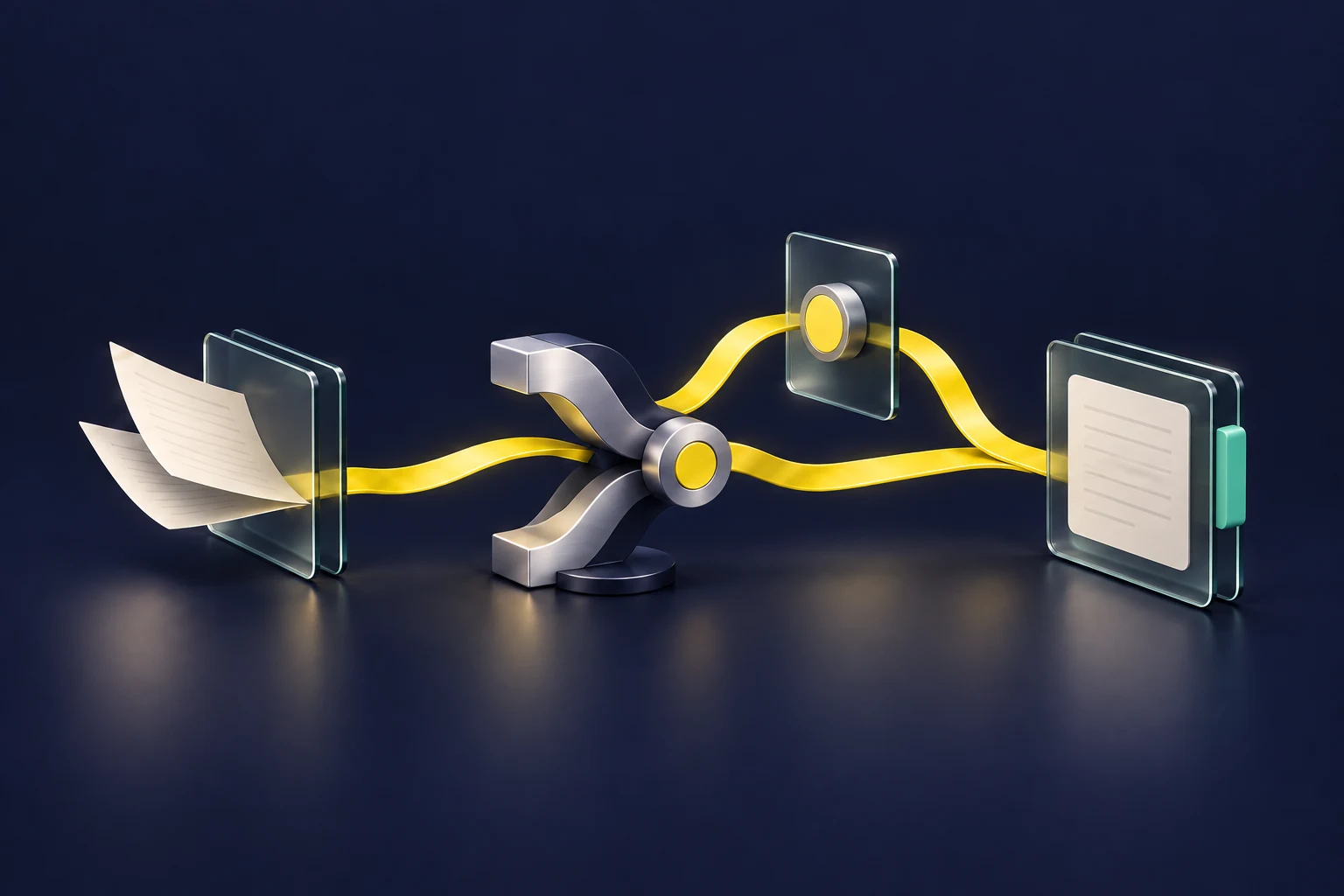
A process with control and visibility
  1. 01InputRequest and informationDocuments, data or a business event
  2. 02DecideRules and human reviewRoute the routine; surface the exception
  3. 03OutcomeAction and recordUpdate systems and retain context

The business problem

Manual work often hides between systems.

Teams may rekey the same information, chase approvals, search inboxes and maintain spreadsheets simply to keep a process moving. Automating one task without understanding the whole journey can move the bottleneck rather than remove it.

  • Requests arrive through inconsistent channels with incomplete information.
  • Approvals depend on reminders and individual knowledge.
  • Data is copied between systems with avoidable delay and error risk.
  • Managers cannot easily see status, ownership or the cause of exceptions.
Two colleagues reviewing a business process together on a tablet
Understand the current work before deciding what should be automated.

Example workflow

From a shared inbox to owned, visible work.

A suitable flow might identify an incoming request, capture its documents and data, apply agreed rules, create the right task and ask a person to review exceptions.

Illustrative document-led workflow
  1. 01
    ReceiveEmail, attachment or structured form
  2. 02
    IdentifyRequest type and required information
  3. 03
    Apply rulesRoute the routine path visibly
  4. 04
    Human reviewIncomplete or exceptional work
  5. 05
    UpdateUse a verified system interface
  6. 06
    Retain contextKeep status and ownership clear

Choose the right candidate

Start where repetition meets business value.

A useful candidate has enough recurring structure to automate, a recognisable operational cost and an outcome that the business can evaluate. It does not need to be a perfectly documented process.

01 / Repetition

Routine movement

The same information, checks or hand-offs occur often enough to justify change.

02 / Friction

Visible delay

People spend time chasing, rekeying, reconciling or correcting avoidable issues.

03 / Outcome

A meaningful result

Faster response, clearer control or better information can be defined for the process.

The delivery approach

Understand, design, test and improve.

Technology is selected in context. A solution may use workflow, an existing platform, Microsoft services, integrations or a focused application—depending on the process.

  1. Observe

    Map the current process, participants, information and exceptions.

  2. Prioritise

    Select a worthwhile starting point with a clear operational outcome.

  3. Design

    Define rules, hand-offs, controls and the role of human judgement.

  4. Implement

    Configure, integrate or build the agreed workflow and interfaces.

  5. Validate

    Test normal, exceptional and failure paths with the people who use them.

  6. Improve

    Review the live process and evolve it as evidence and needs change.

Human control

Automate the predictable. Design for the exception.

Good automation makes ownership and decisions clearer. It should not conceal uncertainty, remove necessary judgement or assume that every input will be complete and correct.

  • Define when a person must review, approve or override.
  • Make exceptions visible instead of forcing them through the normal route.
  • Retain the context needed to understand a decision or status.
  • Plan for unavailable systems, incomplete data and changed business rules.
  • Give users a clear route to correct or escalate the work.

Connected capabilities

Process Automation Enquiry

Show us the process that needs to improve.

Describe the current route, the points of friction and the outcome that would make the work better.

  • Approximate information is useful
  • Required fields are marked *
  • Do not include sensitive information
About you
About the process

Do not include confidential, personal or customer information.

We will use the details you provide to review, route and respond to this business enquiry.

Do not include sensitive, confidential or customer information. Read the Privacy Notice.

No marketing consent is requested by this form.